April 23, 2026
Back to articles
Cats
🐾 From Backyard Visitor to Surgical Success: Elrond’s Journey with Medial Patella Luxation
Meet Elrond
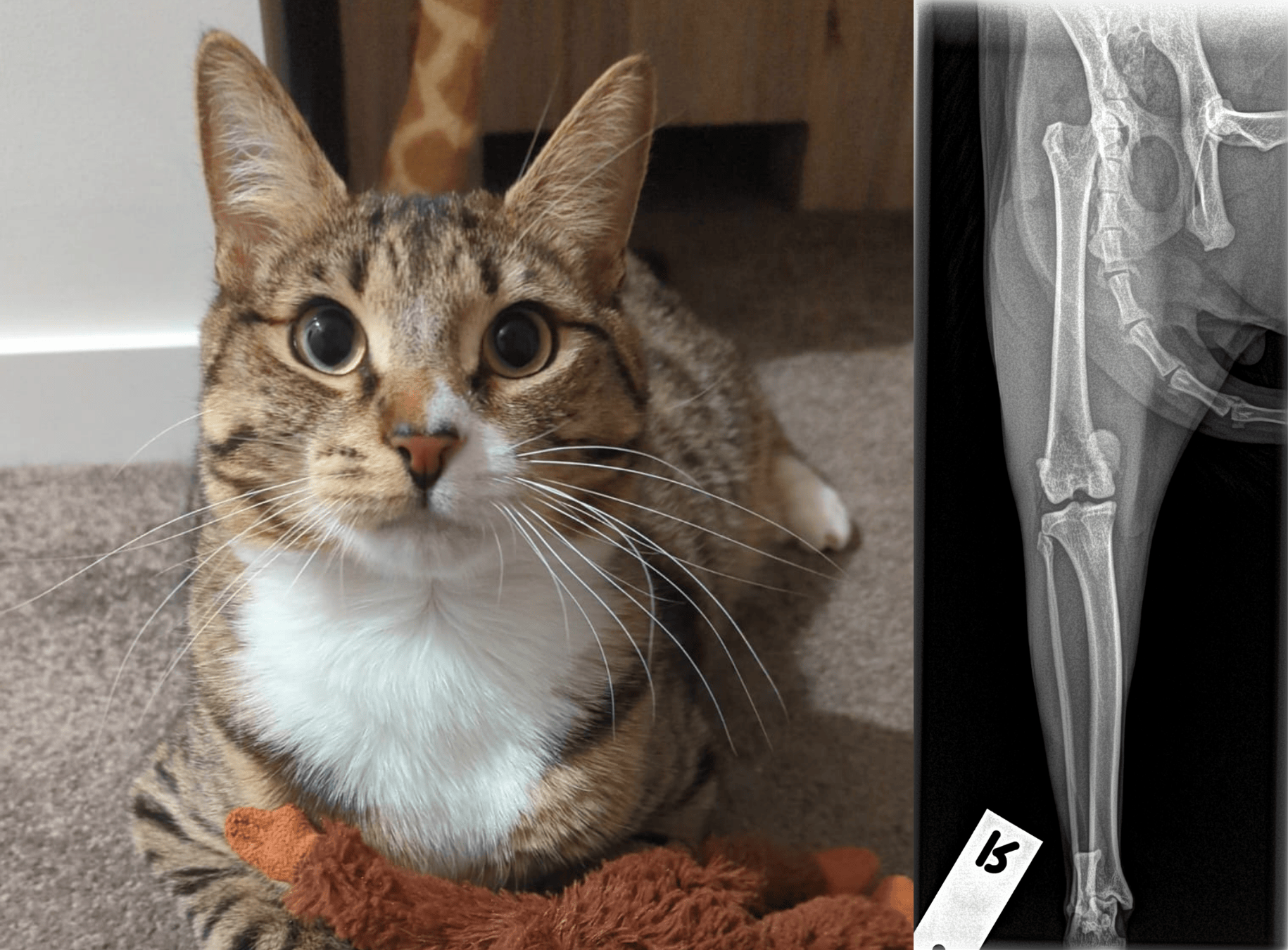
Elrond’s story didn’t start in a clinic, it started in a backyard.
One morning, he appeared at our nurse Karly’s home, unannounced but very welcome. After doing all the right things, checking local lost pet groups and scanning for a microchip it became clear that Elrond didn’t have a home.
So, Karly gave him one.
Over time, this cheeky 3-year-old domestic short hair settled in beautifully. But towards the latter half of 2025, something started to change.
The First Signs Something Wasn’t Right
Karly began noticing:
- A recurring limp in his hind leg
- His knee “popping” out to the side when walking
- Hesitation to jump (very un-cat-like behaviour)
These are classic signs of medial patella luxation a condition where the kneecap (patella) slips out of its normal position.
What Is Medial Patella Luxation?
Medial Patella luxation occurs when the groove that normally holds the kneecap isn’t doing its job properly.
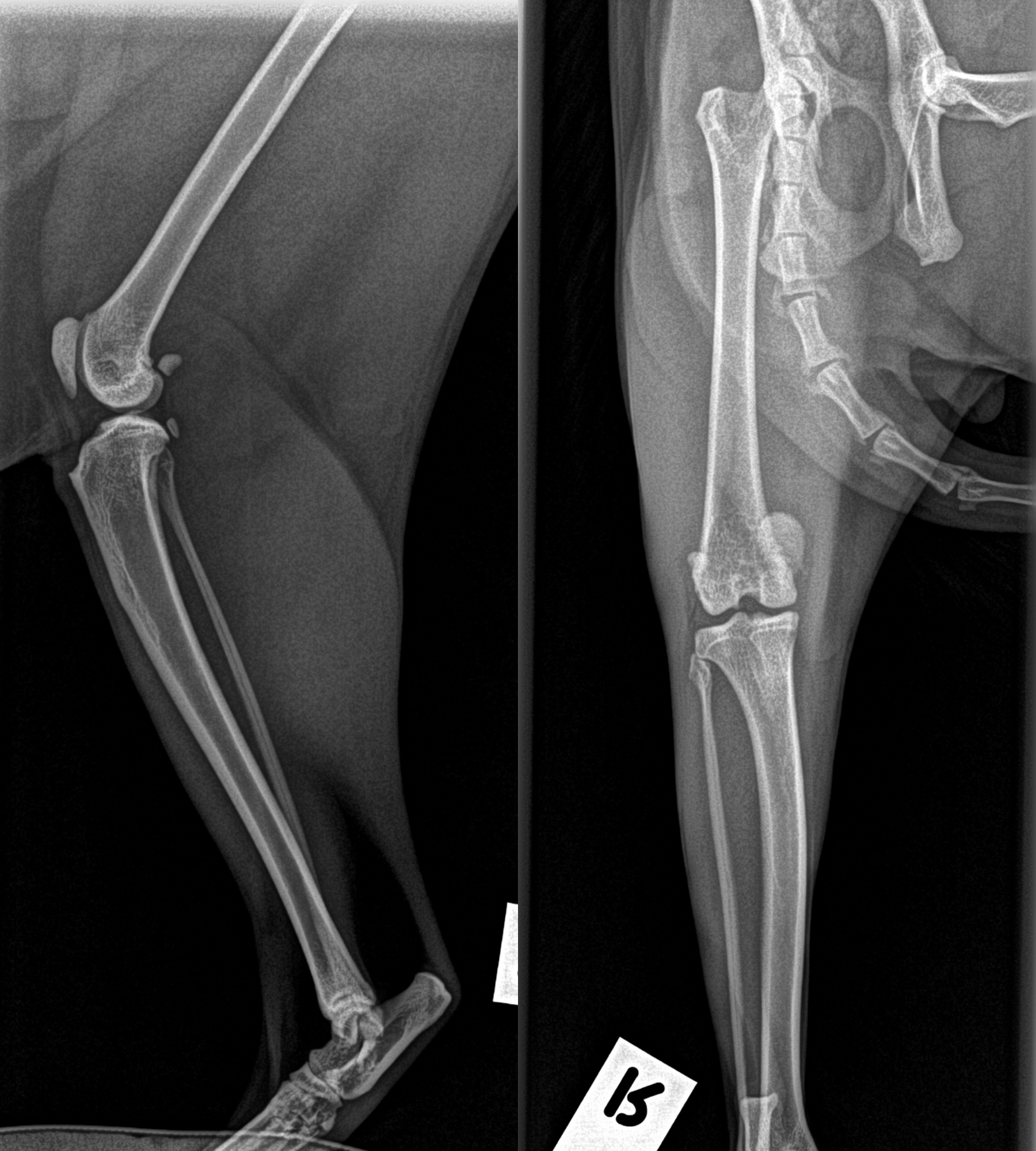
In Elrond’s case, X-rays revealed:
- The patella sitting medially (towards the inside of the leg)
- A curved femur (thigh bone) creating abnormal alignment
- A shallow trochlear groove, meaning the patella had nowhere stable to sit
This combination meant his kneecap could easily slip out of place causing pain, instability, and that tell-tale skipping limp.
The Surgical Solution
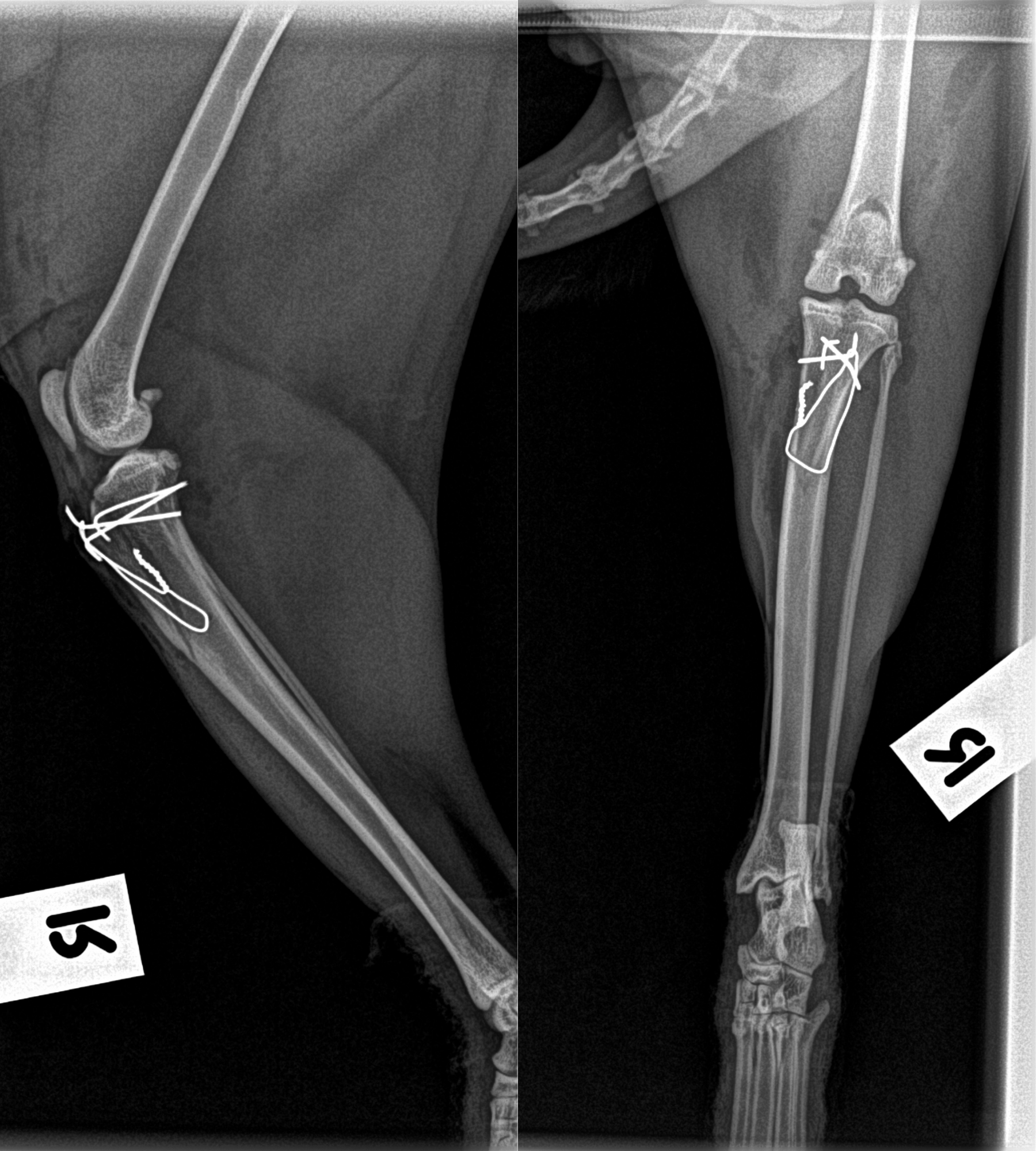
To fix the problem, Elrond underwent medial luxating patella repair surgery performed by Dr Steve Pryor.
This wasn’t a simple “put it back” job it required a multi-step orthopaedic approach:
🔧 What was done during surgery:
- Trochleoplasty
The groove in the femur was deepened so the patella could sit securely. - Tibial Tuberosity Transposition (TTT)
The attachment point of the patellar ligament was moved to realign the knee mechanism. - Stabilisation with pins and wire
K-wires and a cerclage wire were used to hold everything in the correct position while healing. - Soft tissue reconstruction
The joint capsule and surrounding tissues were tightened to support the new alignment.
The result?
✔️ Smooth tracking of the patella
✔️ Full range of motion restored during surgery
Anaesthesia & Pain Management (The Important Bit)
Orthopaedic surgery sounds intense and it is but modern veterinary medicine makes it very safe and controlled.
Elrond received:
- Pre-anaesthetic sedation and pain relief
- General anaesthesia with careful monitoring
- Continuous pain relief infusion during surgery
- Post-op medications including anti-inflammatories and analgesics
This multimodal approach ensures pets stay comfortable before, during, and after surgery.
Recovery & Rehabilitation
Elrond went home the next day with:
- Pain relief medications
- Anti-inflammatories
- A plan to start Cartrophen injections to aid joint health
Recovery from patella surgery typically involves:
- Controlled movement (no zoomies… temporarily)
- Gradual return to normal activity
- Monitoring for swelling or discomfort
The Outcome: Back to Full Chaos Mode
Fast forward to today…
Elrond is:
- Jumping
- Running
- Climbing
- Stealing snacks off the bench (a full recovery milestone)
In other words, back to being a completely normal cat.
What This Means for Pet Owners
If your pet is showing signs like:
- Limping or skipping steps
- Difficulty jumping
- A leg that occasionally “locks” or “pops”
…it’s worth getting it checked early.
Patella luxation can worsen over time but with the right diagnosis and treatment, outcomes like Elrond’s are very achievable.
Final Thought
Elrond went from a mystery backyard visitor to a much-loved (and very active) member of the family with a surgical journey that’s a great example of how modern veterinary care can restore quality of life.
And yes… we’re still working on the snack-stealing.