October 30, 2026
Back to articles
Dogs
Snake Season in Victoria: What to Do If Your Pet Is Bitten
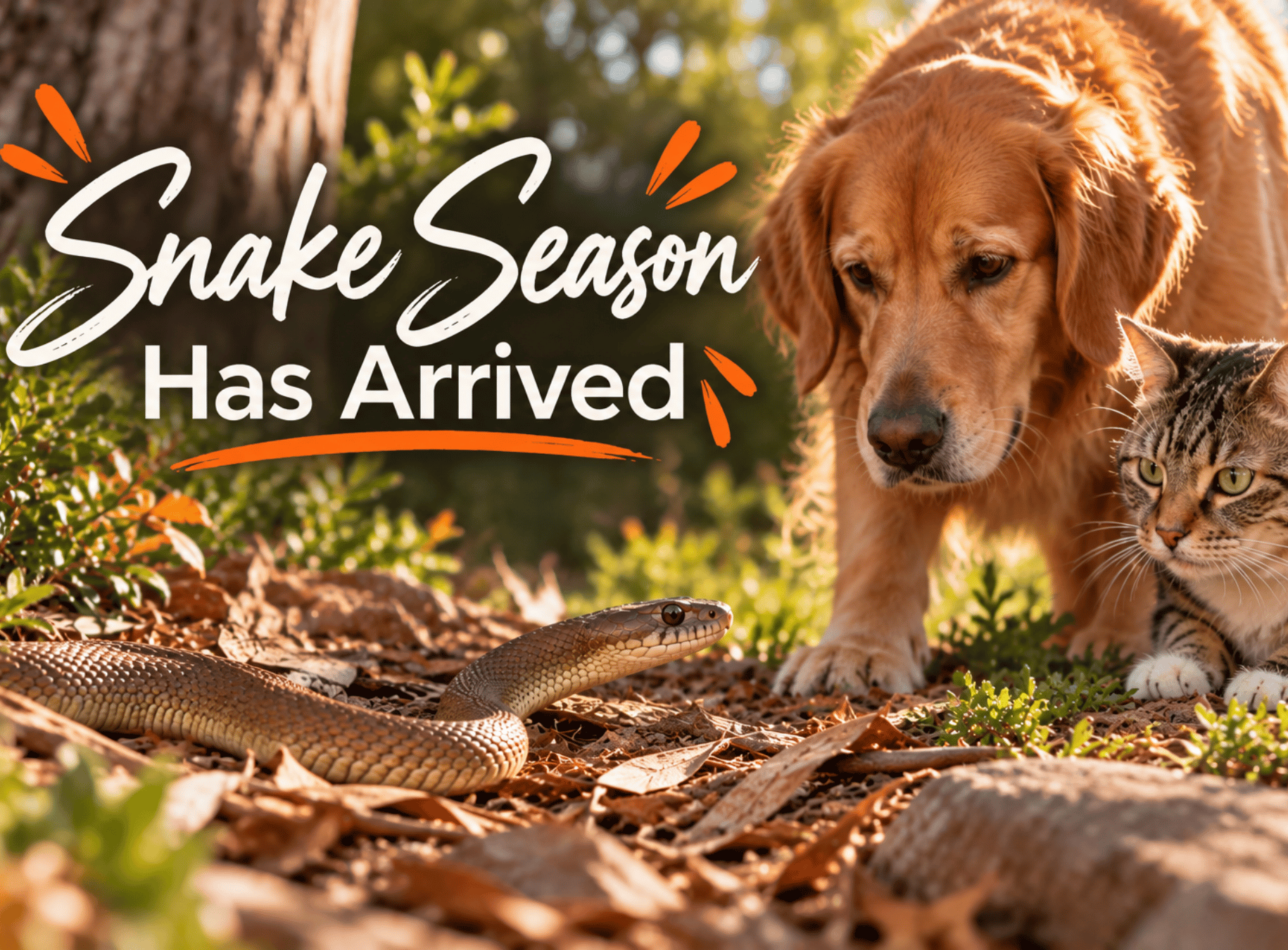
Spring in Melbourne's north-east brings warmer weather and longer days - and for dog and cat owners, it also brings the return of active snake season. Victoria is home to several venomous species including the Eastern Brown Snake, Tiger Snake, and Red-bellied Black Snake, all of which are found in and around Eltham, Diamond Creek, and the surrounding bushland areas.
Knowing what to do in the first minutes after a suspected snake bite can save your pet's life.
When is snake season in Victoria?
Snakes become active in Victoria from approximately October through to April, with peak activity in the warmer months of November, December, and January. They are most active in the early morning and late evening. In bushland areas like Eltham and the Yarra Ranges, snakes can be encountered in garden beds, long grass, wood piles, and near water.
Signs your pet has been bitten
Snake bites are not always witnessed. Your pet may have been bitten without you seeing it happen. Signs typically appear within 30 minutes to a few hours of a bite, though some venom acts faster.
Signs in dogs:
- Sudden weakness or collapse, followed by apparent recovery (a classic early sign - do not be reassured by recovery)
- Dilated pupils
- Vomiting and salivation
- Trembling or muscle tremors
- Paralysis progressing from the hindquarters forward
- Blood in urine
Signs in cats:
- Sudden paralysis, particularly in the hindlimbs
- Dilated pupils unresponsive to light
- Drooling and vomiting
- Difficulty breathing
Cats often show different signs to dogs and can deteriorate rapidly. Any sudden unexplained weakness or paralysis in a cat should be treated as an emergency.
What to do immediately
Stay calm and keep your pet still. Movement increases the rate at which venom spreads through the lymphatic system. Carry your pet to the car rather than letting them walk.
Call us immediately on (03) 9439 8650 or go directly to an emergency vet if it is after hours. Tell them you suspect a snake bite. Time is critical - do not wait to see if symptoms develop.
Do not:
- Apply a tourniquet or try to cut and suck the venom - this does not work and wastes critical time
- Wash the bite wound - venom residue on the skin helps the vet identify the snake species using a venom detection kit
- Try to catch or kill the snake - identification is done via a venom detection kit, not by identifying the snake itself
- Give your pet food, water, or any medication before seeing a vet
Treatment
Snake envenomation is treated with antivenom. Your vet will perform a venom detection test on a swab from the bite site or a urine sample to identify the snake species and administer the correct antivenom. Your pet will also receive supportive care including IV fluids, oxygen, and close monitoring.
The sooner treatment begins, the better the outcome. Pets treated quickly often make a full recovery. Delays significantly reduce survival rates.
Reducing snake risk around your property
- Keep grass mowed short, particularly around the edges of your property
- Remove wood piles, rubbish heaps, and debris where snakes shelter
- Keep bird feeders and chook pens away from the house - they attract mice, which attract snakes
- Check garden beds before letting your dog roam freely
- Keep cats indoors overnight and in the early morning during peak snake season
- Consider a snake-proof perimeter fence if your property backs onto bushland
Is there a snake vaccine for dogs?
There is no commercially available snake vaccine in Australia at present. Prevention relies on risk management rather than vaccination.
If your pet has been exposed to a snake or is showing any signs of possible envenomation, call us immediately on (03) 9439 8650. After hours, contact one of the emergency clinics listed on our emergencies page.