August 19, 2026
Back to articles

Dogs
Bulldog and French Bulldog Respiratory Health: A Complete Guide
Dr Steve Pryor here. Bulldogs and flat-faced breeds are some of my favourite patients - and some of the ones that need the most careful, informed ownership. Whether you have an English bulldog, a French bulldog, a pug, or a Cavalier King Charles Spaniel, the respiratory challenges that come with a flat face follow a similar pattern. This guide covers what you need to know to give your dog the best possible quality of life.
Understanding brachycephalic dogs
The term brachycephalic simply means short-nosed. Bulldogs, French bulldogs, pugs, and other flat-faced breeds have compressed skull structures that result in several overlapping anatomical problems: narrowed nostrils (stenotic nares), an elongated soft palate that partially blocks the airway, a narrow trachea, and sometimes everted laryngeal saccules. Together these problems make up Brachycephalic Obstructive Airway Syndrome, or BOAS.
BOAS is not a simple on/off condition. It exists on a spectrum from very mild to severe, and the key is understanding where your dog sits on that spectrum - because that determines whether management or surgery is the right approach.
BOAS severity grades
Grade 1 (mild): Occasional noisy breathing during exercise or excitement but no significant signs at rest. The dog can exercise reasonably well and recovers quickly. Weight control and environmental management are usually appropriate at this stage.
Grade 2 (moderate): Noisy breathing at rest and during exercise. The dog tires more quickly than expected, may snore heavily, and sometimes coughs or gags. Exercise tolerance is noticeably reduced. Surgery is often recommended at Grade 2 to prevent progression.
Grade 3 (severe): Obvious breathing difficulty at rest. The dog may sleep with their head elevated to keep the airway open, show open-mouth breathing, have prolonged recovery time after minimal activity, or show bluish gums (cyanosis) during exertion. Surgery is strongly recommended. Left untreated, Grade 3 BOAS causes chronic oxygen deprivation and significantly reduces quality of life and lifespan.
One important point: many owners underestimate their dog's BOAS severity because they have normalised the noisy breathing. If your bulldog has always snored loudly, you may not realise that the snoring itself is a sign of a compromised airway. I recommend a BOAS assessment for any brachycephalic dog at desexing time - usually 9 to 12 months - so we can catch and grade any issues early.
English bulldogs vs French bulldogs: key differences
While the underlying BOAS mechanism is the same across breeds, English bulldogs and French bulldogs have some important differences.
English bulldogs typically have more severe tracheal hypoplasia (narrow trachea) than other brachycephalic breeds. This makes their respiratory situation harder to fully correct surgically, as we can widen the nostrils and shorten the soft palate but cannot easily address the trachea. They also tend to carry more weight, which compounds breathing difficulty.
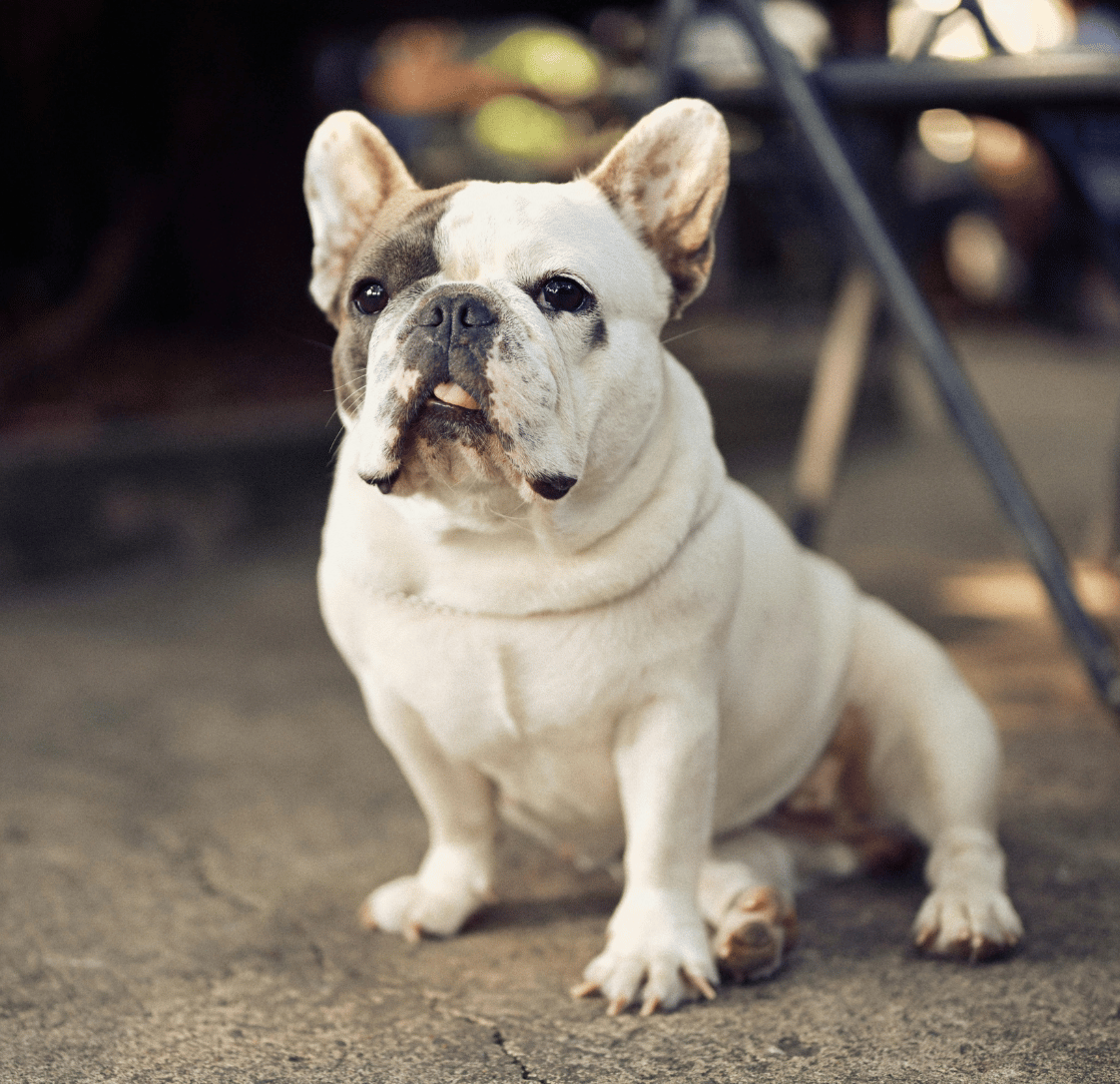
French bulldogs generally have less tracheal narrowing, which means surgical outcomes for BOAS correction are often better in Frenchies. However, French bulldogs are also prone to spinal problems (IVDD), skin fold dermatitis, and eye issues alongside their respiratory concerns - so a full health assessment covers more than just the airways. Our French bulldog health guide covers these additional concerns in detail.
French bulldogs also thermoregulate even more poorly than English bulldogs in hot weather, partly due to their smaller body size. This makes Melbourne summers particularly high-risk for Frenchies.
Heat stress in Melbourne
Melbourne's summers create a genuine danger for brachycephalic dogs. Dogs regulate body temperature by panting, but a dog with BOAS cannot pant effectively. This means their ability to cool themselves is severely limited compared to other breeds.
Practical rules for Melbourne brachycephalic dog owners:
- Do not walk your dog when the temperature exceeds 22 to 24 degrees Celsius
- Walk only in the early morning (before 8am) or after sunset during summer
- Never leave your dog in a car, even briefly, even with windows cracked
- Ensure access to shade and cool water indoors at all times
- Have air-conditioned space available on hot days
Signs of heat stress: excessive panting, drooling, bright red gums, vomiting, staggering, or collapse. This is an emergency. Wet your dog down immediately with cool (not cold) water and get to a vet as fast as possible.
Practical tips to help your bulldog breathe better
Weight management. This is the single most impactful non-surgical action you can take. Every extra kilogram places additional strain on an already compromised airway. A lean bulldog breathes noticeably better than an overweight one.
Harness not collar. A collar placing pressure on the neck restricts airflow. Use a well-fitted harness for all walks.
Controlled exercise. Short, gentle walks. Stop before your dog shows signs of distress. Bulldogs are stoic and will often push through discomfort - it is your job to set the limits.
Stress-free environment. Stress worsens breathing. A calm, consistent routine helps.
Regular vet check-ups. Annual assessments allow us to catch changes in BOAS grade early before they become severe.
BOAS surgery: when and what to expect
If your dog is Grade 2 or 3, or if you want to be proactive at Grade 1, BOAS surgery involves widening the nostrils and shortening or thinning the soft palate. In some dogs, everted laryngeal saccules also need to be removed. The goal is to reduce the obstructions so your dog can breathe more freely.
The best time to do this is early - ideally at the same time as desexing at 9 to 12 months, before secondary changes like laryngeal collapse develop in response to years of effort breathing.
Post-surgery FAQ
How long does recovery take? Most dogs are breathing noticeably more freely within one to two weeks. Full healing takes four to six weeks. Activity is restricted during this period. Read our full BOAS surgery recovery guide for a week-by-week breakdown.
Will my dog breathe quietly after surgery? In most cases, significantly quieter than before. Grade 1 and 2 dogs often become almost silent at rest. Grade 3 dogs see a major improvement but may retain some noise due to secondary changes that cannot be fully reversed.
Can my dog still overheat after surgery? Yes. Surgery reduces airway obstruction but does not give a bulldog the same heat tolerance as a non-brachycephalic breed. Heat management remains important for life.
Is surgery worth it? In my experience, for Grade 2 and 3 dogs, absolutely. The quality of life improvement is often dramatic. Owners frequently tell us they had no idea how much their dog was struggling until they saw them breathing freely after surgery.
If you have a bulldog, French bulldog, pug or other brachycephalic breed and would like a BOAS assessment, call us on (03) 9439 8650 or book online.