November 28, 2026
Back to articles
Cats
Fireworks, Thunderstorms and Noise Phobia: Helping Your Pet Cope This New Year's Eve
While New Year's Eve is a time of celebration for many of us, the loud bangs, flashing lights and unpredictable sounds of fireworks can make it one of the most frightening nights of the year for our pets.
For some dogs and cats, loud noises cause more than just a momentary fright. They can trigger significant anxiety, distress and even panic. This is commonly referred to as noise phobia.
The good news is that with a little preparation and the right support, we can help our pets feel safer and more comfortable.
What Is Noise Phobia?
Noise phobia is an intense fear response to particular sounds. Fireworks and thunderstorms are among the most common triggers, but some pets may also react to construction noise, loud vehicles, household appliances or other sudden sounds.
Noise phobia can develop at any age and may become progressively worse over time if left unmanaged.
It is important to remember that your pet is not being naughty or overreacting. Their fear is genuine, and they may have very little control over how they respond.
Recognising the Signs of Noise Anxiety
Every pet responds differently to frightening noises. Some signs are obvious, while others can be more subtle.
Common signs include:
- Excessive panting, trembling or shaking
- Pacing and restlessness
- Excessive drooling
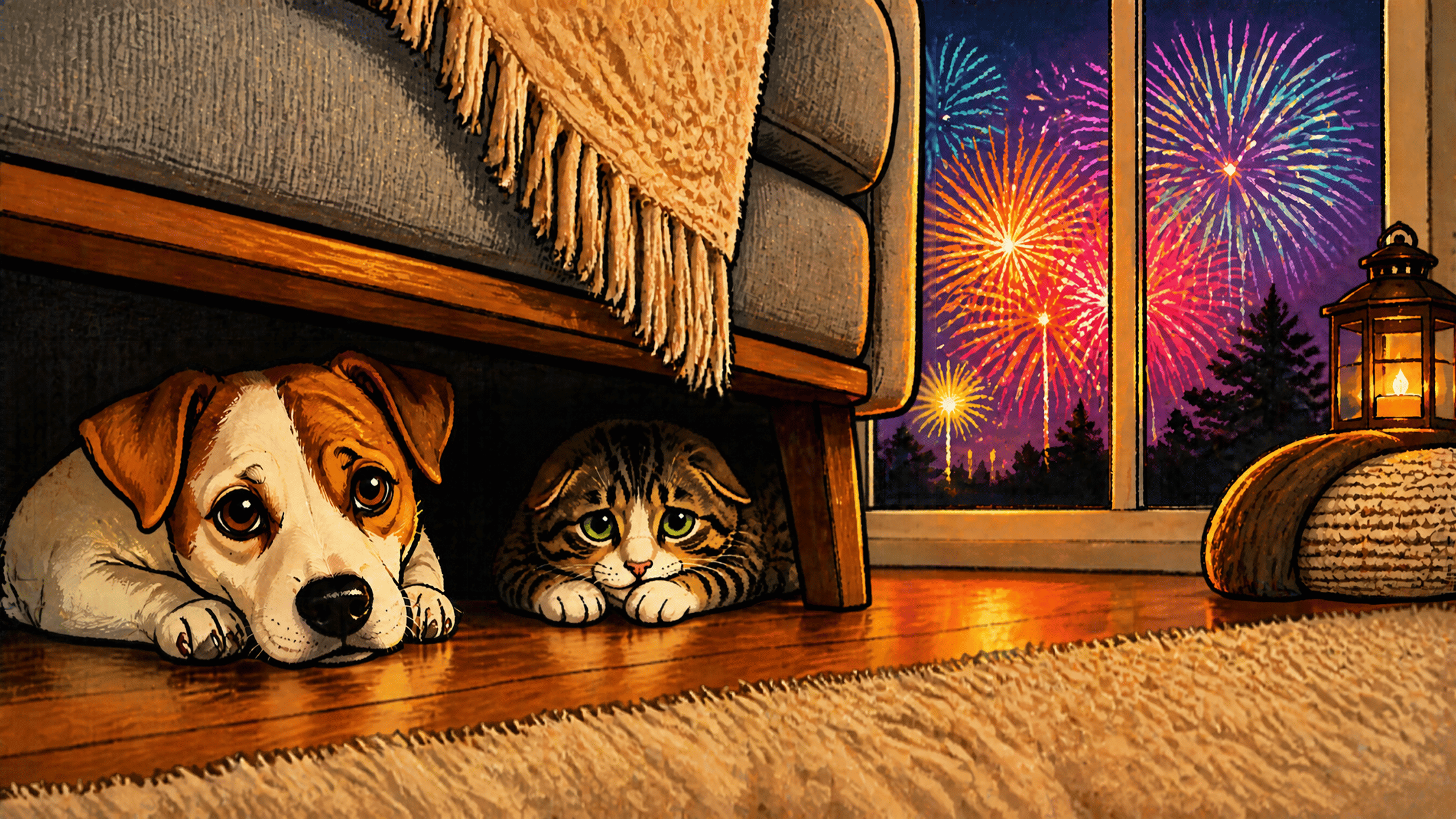
- Hiding under furniture or in unusual places
- Seeking constant reassurance from their owners
- Barking, whining or vocalising
- Refusing food or treats
- Urinating or defecating indoors
- Destructive behaviour
- Attempting to escape through doors, windows or fences
Cats may be particularly good at hiding their distress, often retreating to secluded areas, becoming unusually withdrawn or refusing to eat.
In severe cases, pets may injure themselves while attempting to escape frightening noises.
How to Prepare Your Pet for New Year's Eve
Taking steps before the fireworks begin can make a significant difference to your pet's experience.
1. Create a Safe Space
Set up a quiet, comfortable area inside your home where your pet can retreat.
Include familiar bedding, favourite toys and access to fresh water. For cats, consider providing covered beds, cardboard boxes or elevated hiding places.
Allow your pet to choose where they feel safest rather than forcing them into a particular area.
2. Reduce Outside Noise and Visual Stimuli
Close windows, doors, curtains and blinds before fireworks begin.
Playing the television, gentle music or white noise may help mask some of the outside sounds. Keep the volume at a comfortable level.
3. Exercise Earlier in the Day
Take your dog for a walk earlier in the day, before celebrations begin and when temperatures are comfortable.
Ensure they have had an opportunity to toilet before fireworks are expected. Avoid taking your dog outside during fireworks wherever possible.
4. Keep Your Pets Securely Indoors
Even pets that are normally comfortable outdoors can panic when exposed to fireworks.
Ensure doors, windows and gates are secure, and check that your pet's microchip registration and identification details are up to date.
If your pet needs to go outside during fireworks, keep them securely supervised.
5. Offer Comfort and Reassurance
There is a common misconception that comforting a frightened pet will reinforce their fear.
Fear is an emotional response, not a behaviour that your pet is deliberately choosing. If your pet seeks reassurance, it is perfectly okay to sit with them, gently pat them and offer comfort.
Remain calm, allow them to hide if they prefer, and never punish them for displaying signs of anxiety.
6. Consider Calming Aids
Some pets may benefit from additional support, such as:
- Species-specific calming pheromone diffusers or sprays
- Anxiety wraps or pressure garments, if they are comfortable wearing them
- Food puzzles, lick mats or enrichment activities
- Veterinary-recommended calming supplements
These options may be helpful for some pets, particularly those experiencing mild anxiety. However, they may not provide sufficient relief for pets with more significant noise phobia.
When Should You Speak to Your Vet?
If your pet has previously experienced significant distress during fireworks or thunderstorms, we strongly recommend speaking with your veterinarian before New Year's Eve.
There are prescription medications available that can help reduce fear and anxiety associated with loud noises.
The aim of these medications is not simply to sedate your pet, but to help reduce the anxiety they are experiencing and improve their emotional wellbeing.
Your veterinarian can assess your pet's individual needs, medical history and any existing medications to determine the most appropriate treatment plan.
Some medications need to be administered before the anticipated noise begins, and your vet may recommend a trial dose ahead of the event to assess your pet's response.
This is why it is so important to plan ahead rather than waiting until the fireworks have already started.
Never give your pet human anxiety medications or sedatives without veterinary advice.
Managing Noise Phobia in the Long Term
While fireworks may only occur a few times a year, thunderstorms and other loud noises can be much less predictable.
For pets with ongoing noise phobia, a longer-term management plan may be beneficial.
This can include desensitisation and counterconditioning, where your pet is gradually exposed to recordings of triggering sounds at a very low volume while creating positive associations through treats, play or other enjoyable experiences.
This process should be undertaken gradually, when your pet is relaxed, and without exposing them to sounds loud enough to cause fear. It can take weeks or months to achieve meaningful improvements.
Your veterinarian can help develop an appropriate management plan and, where necessary, recommend additional support from a veterinary behaviourist.
Don't Wait Until New Year's Eve
If you know your pet struggles with fireworks, thunderstorms or other loud noises, now is the perfect time to start preparing.
With veterinary clinics operating on reduced hours over the festive period, we encourage owners to arrange consultations and any necessary prescription refills well in advance.
Noise phobia is a genuine welfare concern, but it is also something we can help manage. Your pet does not have to suffer through every thunderstorm or fireworks display.
Contact our friendly team to discuss how we can help your pet enjoy a calmer, more comfortable New Year's Eve.